


It started with fire. Not metaphor. Not history. Actual fire.
On April 28, 2025, flames lit up the Memphis night sky. The Clayborn Temple, a historic Black church that once served as a hub for civil rights organizing in the 1960s, was burning. Fire crews rushed in, but the damage was done. The sanctuary that had echoed with protest songs and union chants was gutted.
This wasn’t faulty wiring. It wasn’t lightning. It was arson. Investigators confirmed that the fire was set on purpose, from the inside. Someone wanted Clayborn gone.
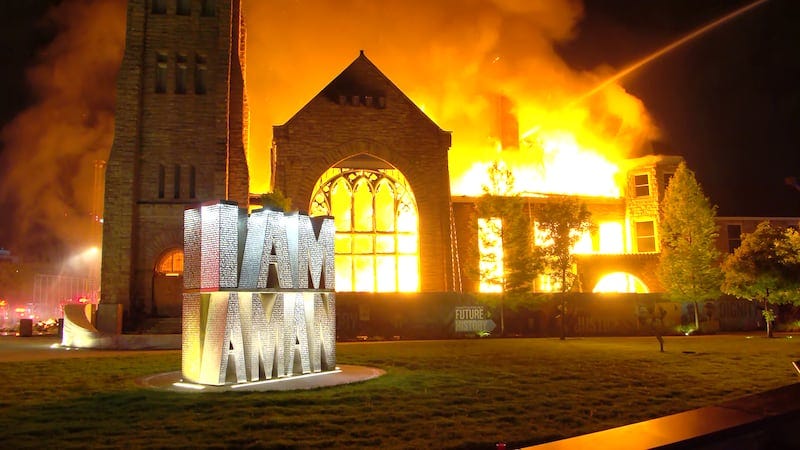
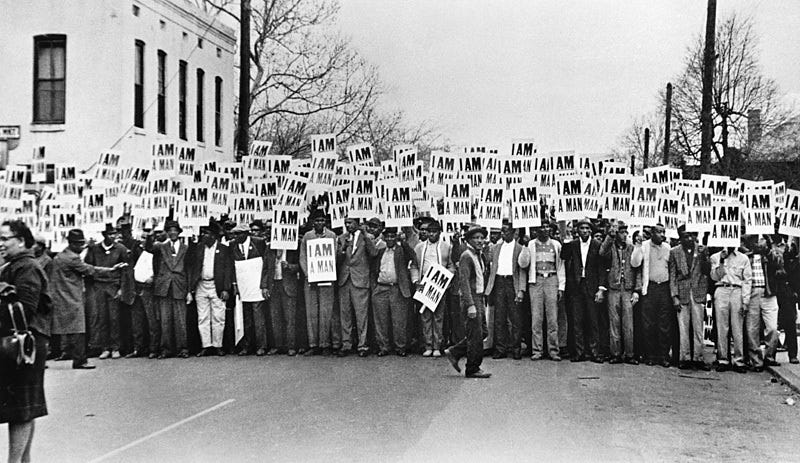
It’s hard to overstate what that church meant. See, Clayborn wasn’t just a church. It was a pillar of Black resistance. In 1968, it was the starting point for the sanitation workers' marches.
The place where exhausted, underpaid Black workers gathered with their “I Am A Man” signs. Where Dr. Martin Luther King Jr. walked. Where people stood up and demanded to be seen. The same movement that brought Martin Luther King Jr. to Memphis just before he was assassinated.
Now it’s smoke. Charred beams. A renovation project turned into rubble. The $25 million restoration meant to honor that legacy is now a crime scene and the silence around it is almost as loud as the flames.
While Clayborn’s walls were still smoldering, something else was happening a few miles away. This one didn’t come with flames or the sirens of a firetruck. No, this one came with machines.
Apartheid heir Elon Musk’s company, xAI, had quietly rolled over 30 methane gas turbines into South Memphis. Their purpose: to power what Musk calls the largest artificial intelligence supercomputer on Earth - Colossus.
No community meeting. No permits filed for most of the turbines. No chance for South Memphis residents to say no.
These turbines now emit over 2,000 tons of nitrogen oxides each year. That’s pollution linked to asthma, heart failure, and premature death. That’s pollution linked to asthma attacks, heart failure, strokes, and premature death. It’s invisible, but it lands in people’s lungs like dust.
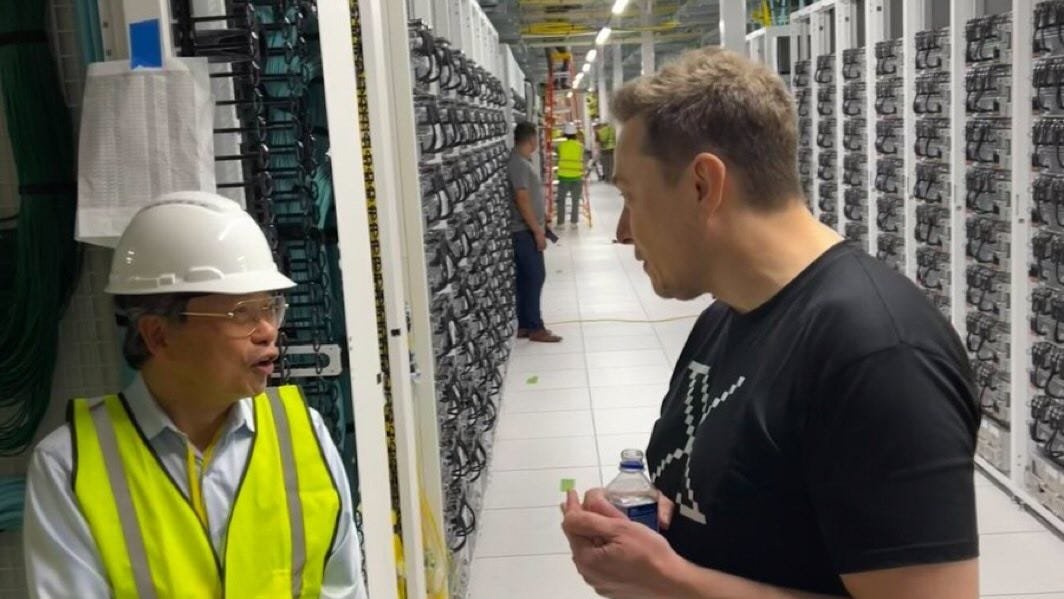
And where did Musk choose to put this project? In South Memphis. Specifically, in and around the Boxtown neighborhood: a predominantly Black, low-income area that has already spent decades living in the shadow of polluting industries. People here already struggle to breathe. Now, they are being asked to absorb the exhaust of a billionaire’s empire.
Environmental groups have called it what it is: environmental racism. This neighborhood was already overburdened. Now it is being suffocated for someone else’s profit. It’s hard to ignore the poetry in it.. the twisted, cruel poetry. A church that stood for Black resistance is reduced to rubble. Meanwhile, a billionaire’s machines quietly start up nearby, pouring poison into the lungs of a community that never consented.
At a recent public hearing, one resident, Alexis Humphreys, stood holding her asthma inhaler and asked, through tears, “How come I can’t breathe at home, and y’all get to breathe at home?”
That’s the question no one wants to answer. The city calls it innovation. The people living there know better.
First they beat him to death. Then they called it justice.
In January of 2023, Tyre Nichols was pulled over by Memphis police. He wasn’t armed. He wasn’t dangerous. He was a 29-year-old father, a photographer, and a skateboarder who loved sunsets. He was just trying to get home.
Something happened at that traffic stop.. something brutal. Body camera footage later showed Tyre running, frightened. Not attacking. Not threatening. Just running.
The officers, Tadarrius Bean, Demetrius Haley, Desmond Mills Jr, Emmitt Martin III, and Justin Smith, chased him down, pinned him to the pavement, and then they beat him. One after another. They kicked him in the head. They punched him in the face. They used their fists, their boots, their batons. They propped him up and hit him again.
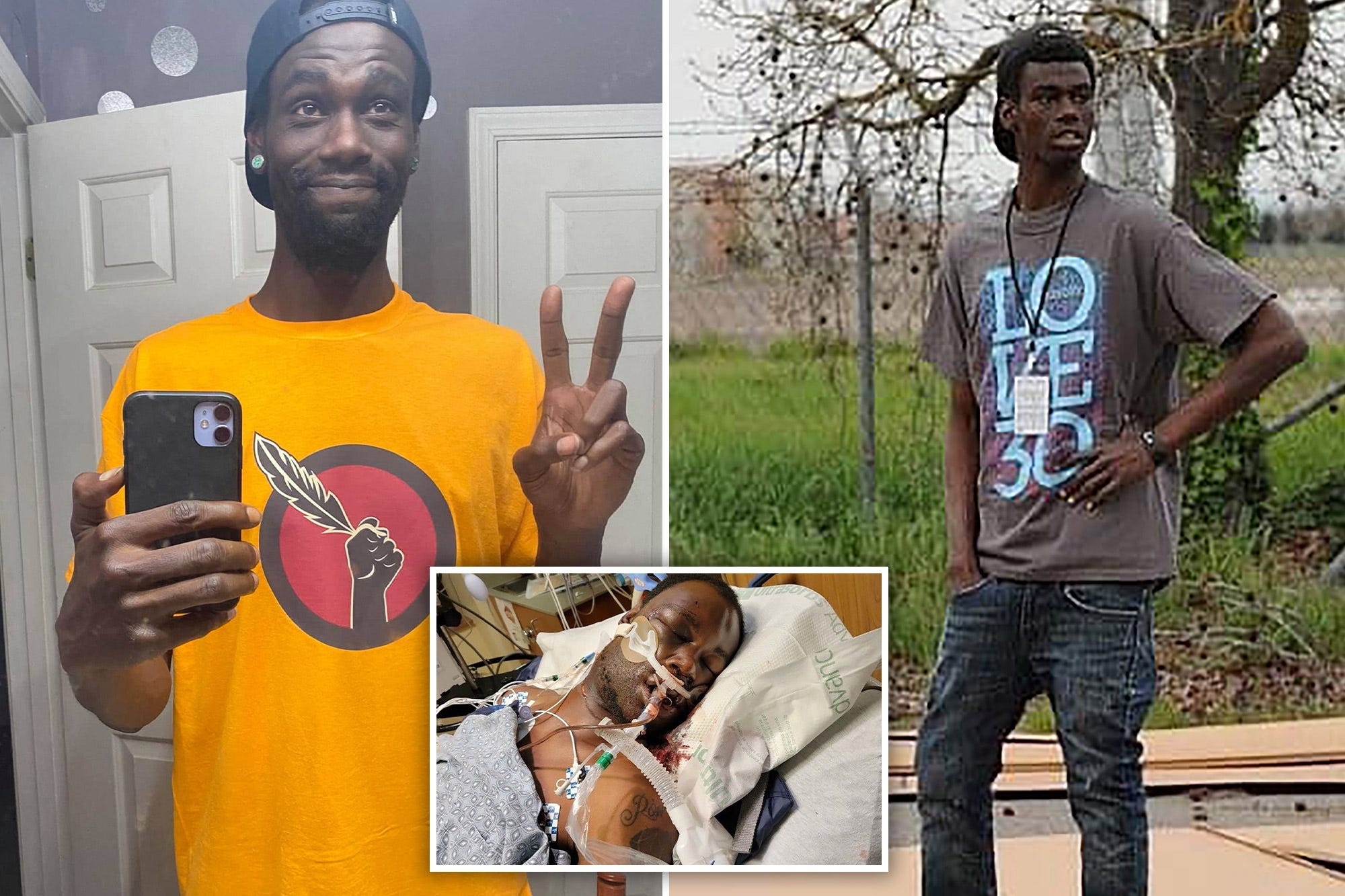
He died in the hospital three days later from his injuries. Head trauma. Internal bleeding. His face was swollen beyond recognition. The autopsy confirmed what the video showed.. this wasn’t a struggle gone wrong. This was a killing. Yet, two years later, just days ago, a jury found those three officers not guilty. Not of murder. Not even of misconduct. The jury wasn’t from Memphis. The prosecutors said that was the only way to get a “fair trial.” But who was that fairness for? Not Tyre.
At one point, Tyre cried out for his mother.
It wasn’t just a cry.. it was a plea that cracked something open in everyone who heard it. A grown man, 29 years old, calling for the one person in the world who had ever made him feel safe. He wasn’t shouting in anger. He wasn’t screaming at the officers. He was calling out in fear. In agony. In the raw, instinctive hope that maybe, somehow, if his mother could just hear him, she could come. She could stop it. She could save him.
He was only five houses away from where she sat inside, unaware that her child was dying in the street.
That cry wasn’t weakness. It was humanity in its most vulnerable form. In that moment, stripped of all dignity and protection, he did what so many of us would do.. he reached for the memory of love. Of safety. Of someone who might see him not as a suspect, not as a threat, not as a target, but as a son. Her son.
It was heartbreaking because we all knew: no one came. No one stopped it. And he knew that, too.
He knew he was dying. And in his final moments, what he wanted, no… what he needed, was his mom. That’s what makes it so unbearable. Not just the violence, but the loneliness of it. The abandonment. The fact that the last sound Tyre Nichols made in this world was a cry for help that went unanswered.
That cry now echoes far beyond that Memphis street. It lives in the minds of mothers everywhere. It lives in the chests of people who know what it means to be helpless. And it lives in a country that keeps proving, over and over, that Black sons are never safe, not even when they call for their mothers.
Tyre’s mother, RowVaughn Wells, had become the quiet center of a national storm. She stood behind podiums. She begged for accountability. She asked people not to riot. She asked people to hope and when that verdict came down.. when she heard that the men who beat her son to death would walk free.. she collapsed. She had carried her grief with grace. The system gave her nothing in return.
And Memphis... Memphis didn’t riot but it didn’t rest either. It sat in the heaviness. It breathed the injustice like smoke from the Clayborn fire. The message was clear, as it’s been so many times before: in this country, Black pain is optional. Black death is negotiable and justice is a coin toss… rigged before it ever leaves the hand.
Authors Note: Ms. Wells, if you’re reading this, I just want you to know that your strength has not gone unnoticed. You have carried the weight of unimaginable grief with grace, and the world heard your son’s cry through you. I’ve thought about you more times than I can count. Your son’s voice, calling out for you, changed something in all of us. I hope you know that you are not alone. ♥
1,500 FBI Agents Flood American Streets
Days after the verdict, the federal government made its move.
Kash Patel, Donald Trump’s handpicked FBI Director, didn’t come to Memphis with condolences. He came with reinforcements.
Standing in front of cameras, he declared Memphis the “homicide capital of America per capita,” and announced that over a thousand federal agents were being pulled from Washington, D.C., and dropped into cities like Memphis.. cities still bleeding from the very systems he now sought to flood with force.
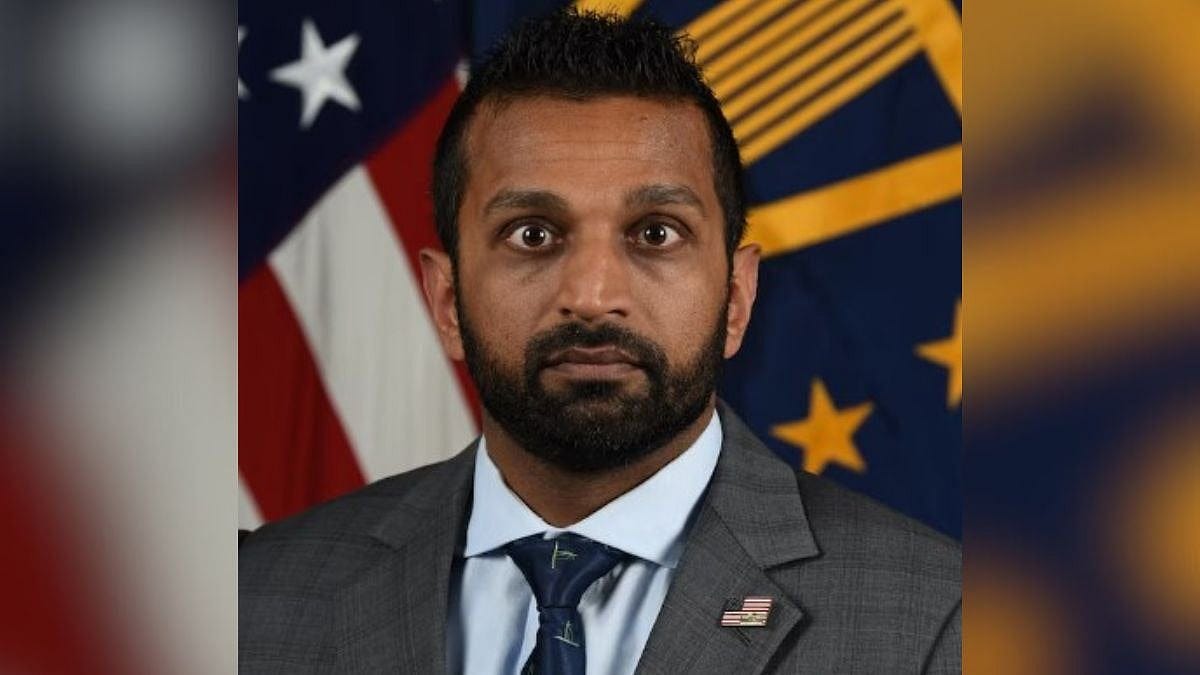
He said it was about safety but the timing said something else.
The city was still smoldering, figuratively and literally. The Clayborn Temple lay in ruins. Tyre’s mother had only just fallen to her knees in a courtroom hallway ad now, federal agents were being shipped in by the hundreds. No clear plan. No community input. Just more armed men, more boots on the ground.
The city was still smoldering. The Clayborn Temple lay in ruins. Tyre’s mother had only just fallen to her knees in a courtroom hallway. And now, federal agents were being shipped in by the hundreds. No clear plan. No community input. Just more armed men, more boots on the ground.
They didn’t say how many were coming to Memphis. They didn’t say how long they’d stay. They didn’t say who they’d be watching. But history already told the people everything they needed to know.
This wasn’t help. This was occupation.
Residents weren’t asking for surveillance. They were asking to breathe clean air. To walk home without dying. To be heard when they cried out. Instead, they were getting choppers in the sky, unmarked vans on corners, and “partnerships” with the same local departments that had just been let off the hook for killing a man in the street.
It didn’t feel like protection. It felt like punishment.
The city had already been cracked open. Now the federal government was pouring salt in the wound. No one was asking how to prevent another Tyre. No one was talking about repairing the rupture. The response was as predictable as it was cruel: more control, more presence, more pressure on a community that had already been made to suffer in silence.
And if you listened closely, beneath the hum of the turbines, the hush of courtrooms, the static of news cycles, you could still hear that one voice. A cry for his mother.
And the sound of a country choosing, yet again, not to answer.
We have got to set this all right somehow. We have to keep fighting. So much evil.
We have to stop this somehow. When will we all say: ENOUGH! NO MORE! We are all going to have to go to the streets. It's the only way to get their attention. I only hope it's not too late.