


We’ve all watched it creep into our feeds — from now-Vice President JD Vance’s “childless cat ladies” remarks to Dr. Mehmet Oz — the current Administrator of the Centers for Medicare & Medicaid Services — standing in the Oval Office and declaring that America is “under-babied.”
If “under-babied” sounds made up, that’s because it is. The word has a Margaret Atwood quality to it, the kind of phrase you’d expect penciled into the margins of The Handmaid’s Tale. Except Gilead is fiction, and the American pro-natalist movement isn’t, and it’s already made it through the doors of the White House.
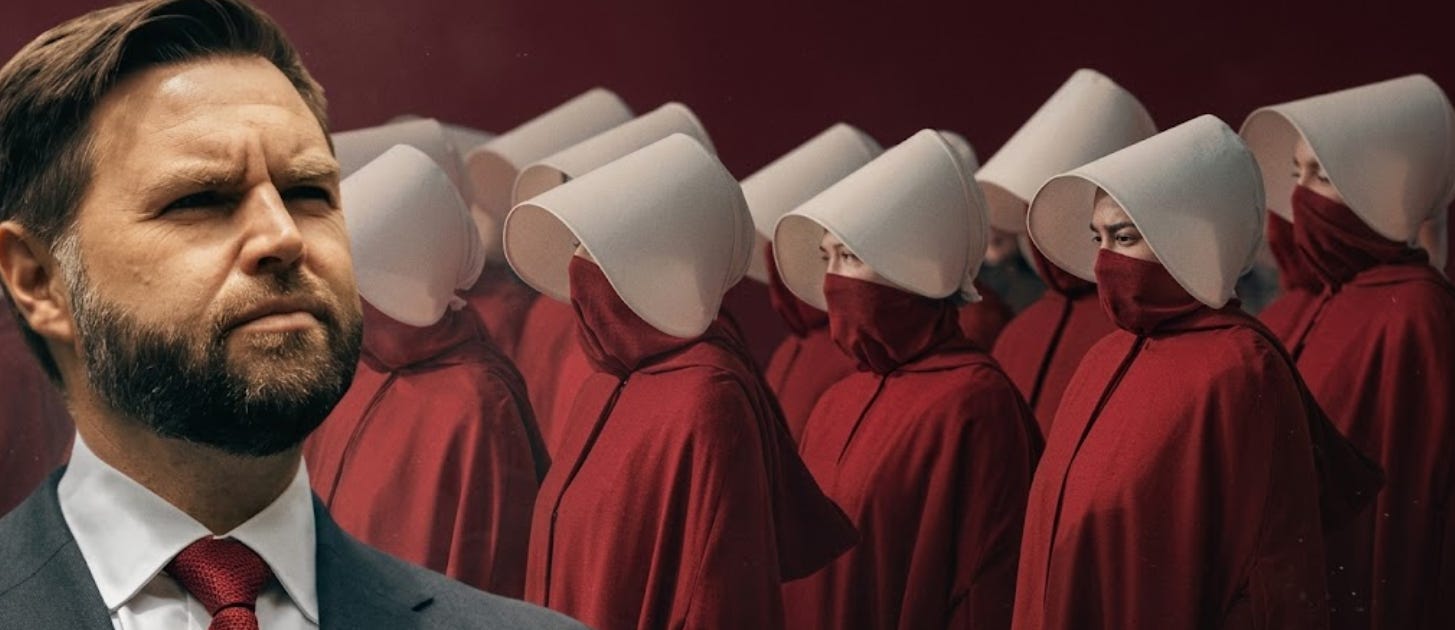
The Eugenics Movement of 2026
Pronatalism sells itself as a rescue mission against "mass extinction" and "demographic collapse," asking people to have more babies so America won't run short of workers later. And no, that's not a sensationalized spin. Treating children as future labor supply is literally what the studies they cite say.
“The U.S. fertility rate has fallen to a record low of approximately 1.66 children per woman as of 2021, well below the replacement level of 2.1, driven by women delaying childbirth and increasing childlessness. This demographic shift creates severe economic, social, and fiscal challenges, including a shrinking workforce, strained social services like Social Security, and potential long-term population decline.”
And sure, it’s easy to look at numbers like that and feel scared.
Which is, conveniently, the point. The fixation on the fertility rate was never really about the fertility rate. It’s about convincing you that there is a crisis, that the crisis demands a solution, and that the solution is theirs.
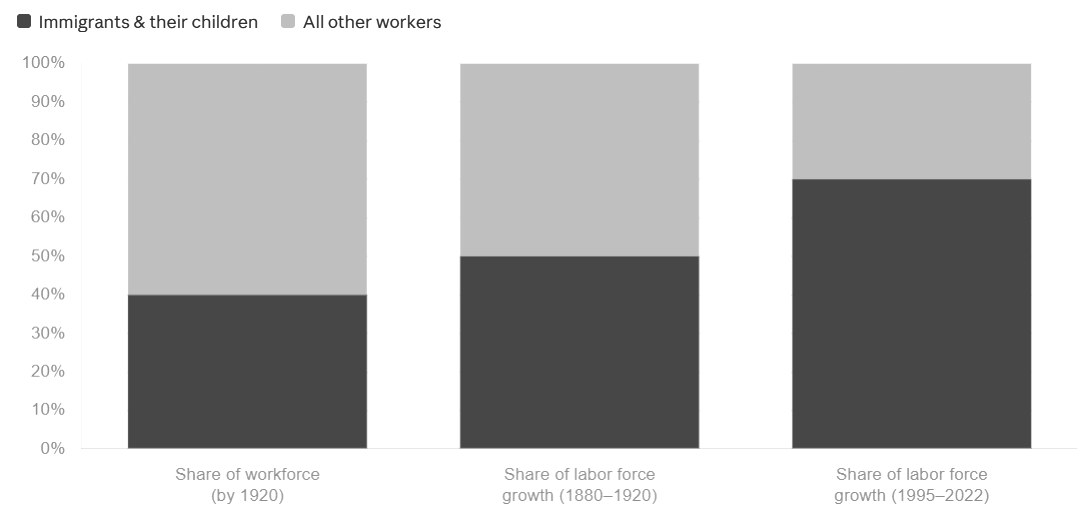
America already has a solution to this, and it happens to be the same thing the country was founded on: immigrants.
The industrial economy that pro-natalists tend to mythologize was built by immigrants. By 1920, immigrants and their children made up 40 percent of the American workforce and accounted for nearly half of the country's labor force growth over the previous four decades. It’s been 106 years, and that statistic has not changed much. Between 1995 and 2022, immigrants and their children accounted for roughly 70 percent of all civilian labor force growth.
The Congressional Budget Office projects that starting in 2030, annual deaths in the U.S. will outpace annual births, and without immigration, the population begins to shrink that same year. America has a way out of its own demographic panic. It has always had one.
And yet, the pronatalist movement — like Vice President JD Vance, Simone and Malcolm Collins, Peter Thiel, and Kevin Dolan — are explicitly against immigration to solve this issue. So, is it really about preventing societal collapse, or is it white nationalism dressed up as social science?
The Cambridge Dictionary defines natalism as “believing that it is important to have children in order to increase the number of people in a country, especially the number of people who are not immigrants.”
This isn’t a new idea. It’s not even a new script. Nazi Germany used nearly identical rhetoric. Falling birth rates. Racial purity, and a focus on how their people were not reproducing. It was disgustingly effective.
"Our people aren't having enough children to replace themselves. That should bother us." — J.D. Vance, National Conservatism Conference, 2019.
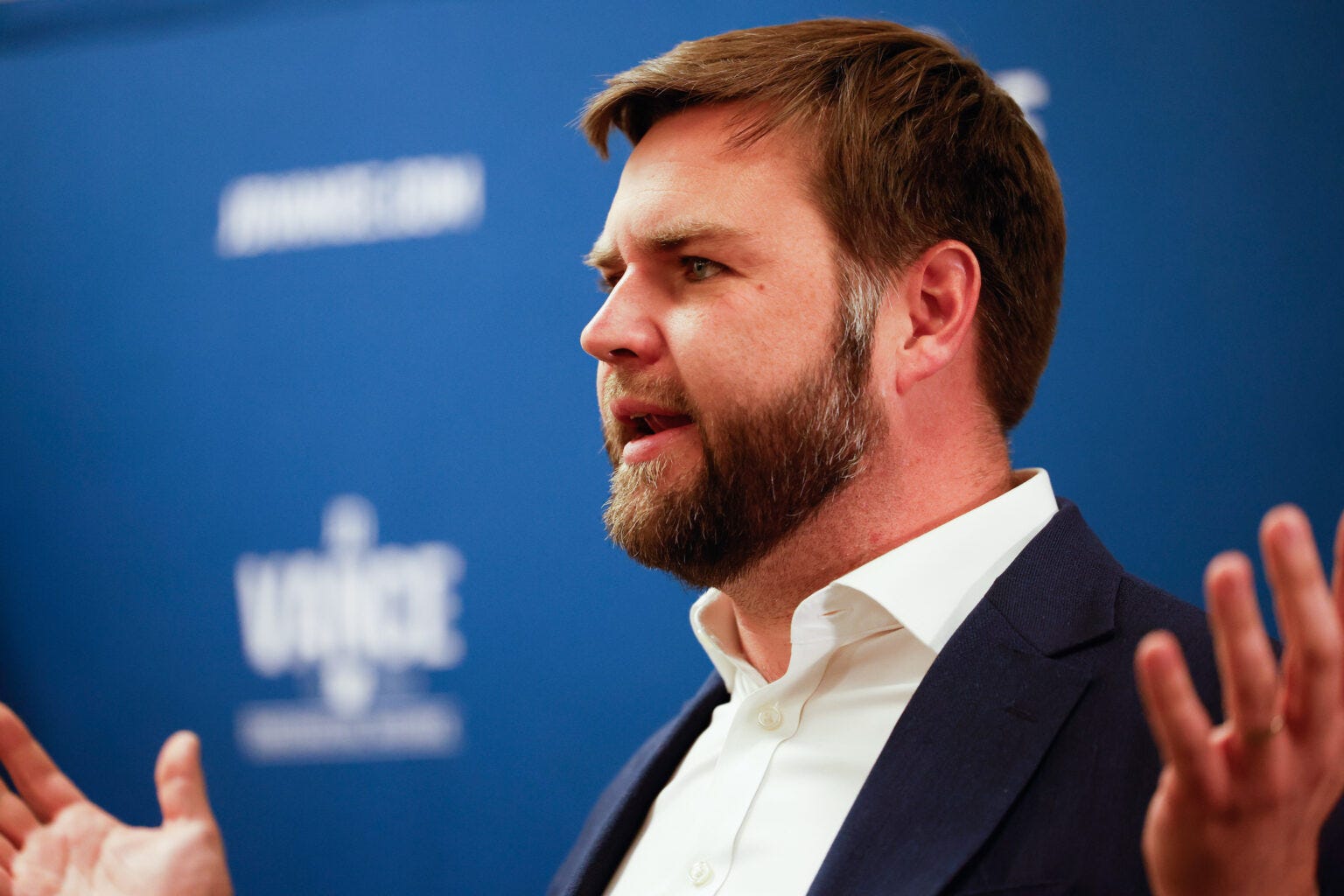
Vance has explicitly stated that in his eyes, immigration is not an acceptable solution to falling birth rates. He wants more babies born here, and not the immigrant kind. He got that from Viktor Orbán, who openly opposes immigration as a fix for population decline, and pushes baby bonuses instead.
The ongoing push to remove immigrants may have been designed, at least partly, to create a labor crisis. As a crisis creates fear, and fear creates change.
In 2014, Orbán said he wanted to build an "illiberal state" in Hungary. He wanted to get rid of the liberal democracy in Hungary. Liberal democracy is not a leftist buzzword. It is the system America was built on, where elections determine power but the constitution limits what that power can do to protect individual rights.
Over time, Orban created a government that allowed him to stay in power for over 15 years. So, understand that when Vance flew to Budapest last month and told a crowd, "We have got to get Viktor Orbán reelected as prime minister of Hungary!" He was endorsing everything he stands for.
Orbán has also spent his regime being viciously anti-LGBTQ rights, and frankly, existence. He banned legal gender changes, same-sex adoption, and any classroom mention of gay or trans people, then capped it off by amending the constitution in 2025 to recognize only two sexes. He was recently voted out, but the damage is written into law.
And that’s a sentiment we see echoed throughout the entire pro-natalist movement. JD Vance, as a senator, introduced a bill — the companion to Marjorie Taylor Greene’s House version — to make gender-affirming care for trans youth a federal felony nationwide.
Vance has consistently asserted the view childlessness is associated with sociopathy and has advocated for granting parents greater voting power than non-parents.
Simone Collins, the movement’s most recognizable face and the architect of Pronatalist.org, does not extend her concern for “the children” to all of them. She opposes gender-affirming care for youth and refers to trans people as members of a “trans cult,” revealing that the project was never simply about more children, but about the right kind of children, raised in the right kind of values.
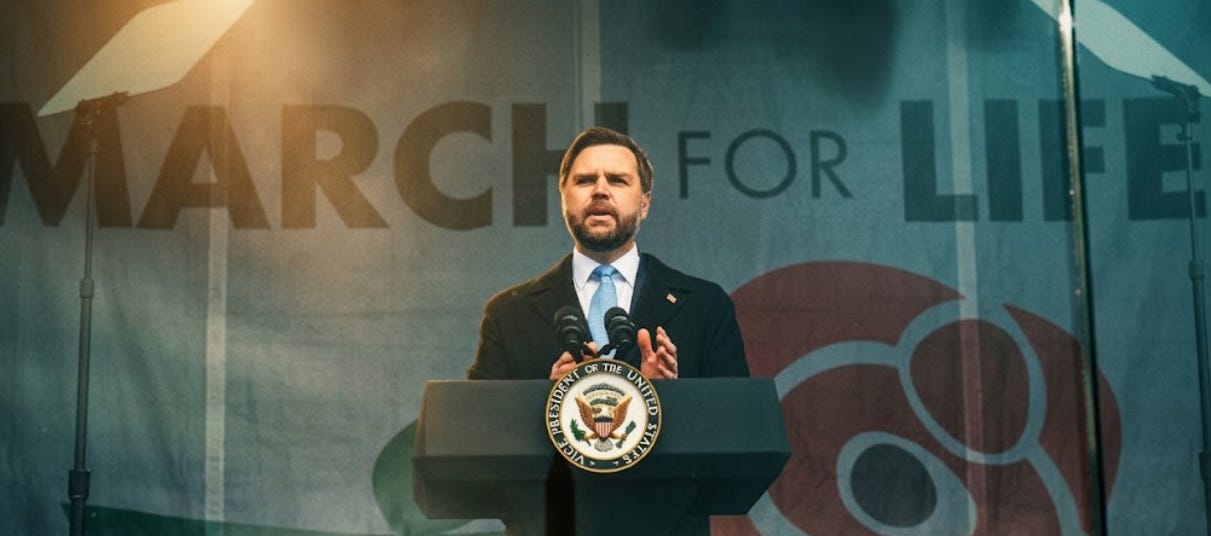
At an anti-abortion rally in January, Vance stated, "It's not our job as the United States of America to promote radical gender ideology; it's our job to promote families and human flourishing."
Trump’s second term is using Orbán’s Americanized playbook
On day one, Trump signed an executive order stating that there are only two sexes based on conception, there will be no federal gender-affirming care funding, no gender on passports, and no trans people in sex-segregated federal spaces.
There’s even been talk of implementing a Nazi-era practice to give mothers medals for having more babies. This practice, of course, has happened much more recently with Russian President Vladimir Putin, who reinstated the “Mother Heroine“ award for women with 10 or more children, and Hungarian Prime Minister Viktor Orbán has described reproduction as a “national cause.”
Authoritarians fixate on nationalism and breeding for the same reason insecure people fixate on their legacy: they're terrified of disappearing and need a crowd to agree with them.
And they’re not hiding it. While JD Vance — whose wife is pregnant — has spent time mocking “childless cat ladies” for not reproducing, they rest of the movement is openly bragging that they are — and to them children are power. Their own army of tiny, ideological foot soldiers to drag their nationalist ideologies into the future. A voting bloc in diapers, if you will.
Simone Collins has claimed that feminists who do not reproduce will simply be bred out of existence. The future is inherited by whoever bothers to populate it, and so the only way to escape a "Handmaid's Tale future," she says, is for feminists to manufacture more citizens loyal to their cause.
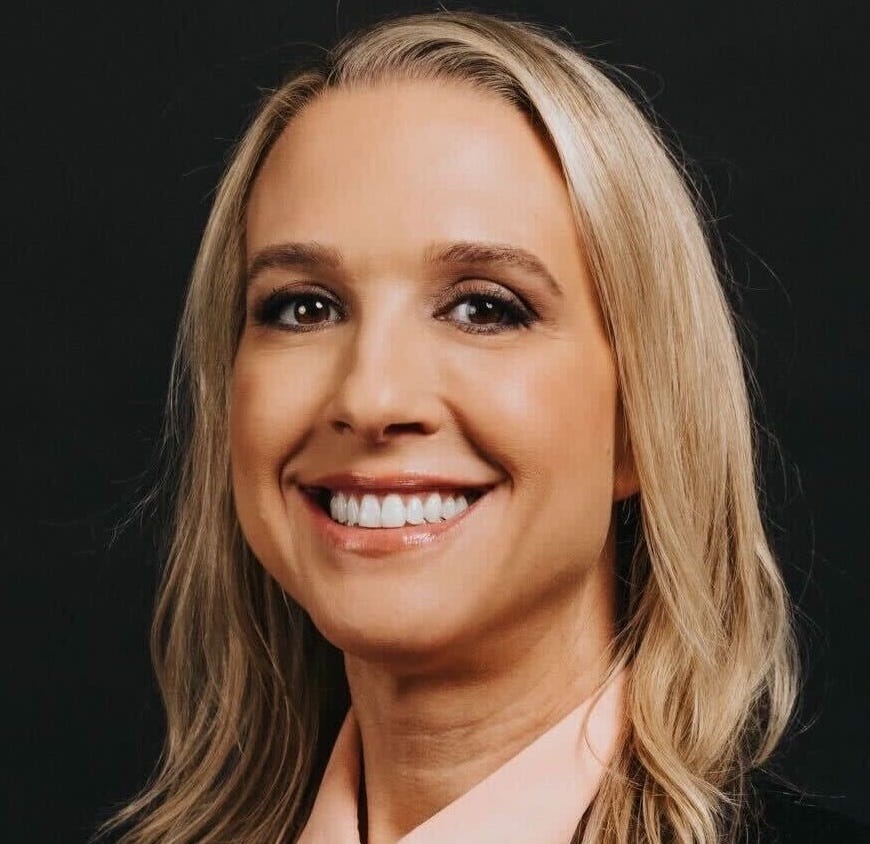
Peachy Keenan — who proudly wears the branding, “One of America's Most Famous Trad Wives” made it very clear in an NPR interview: “We don’t really want to market natalism to the progressive feminists. The people maxing out their fertility should be people, ideally, who won’t raise their children to be gender-neutral furries who want to join Antifa one day.”

The Pro-Natal Organizations — and the Network Underneath
This is not a grassroots movement. It has never been a grassroots movement.
Simone Collins didn’t stumble into pronatalism from a mommy blog. She came out of Peter Thiel’s orbit, having worked for his ultra-secretive, invitation-only forum called Dialog — a closed-door gathering of executives, elected officials, and academics that functions like the Bilderberg Meeting, but quieter. In 2025, Dialog purchased land in the Washington, D.C. area for a planned campus. Reported members include Scott Bessent, Cory Booker, Ted Cruz, Tulsi Gabbard, Jonathan Haidt, Reid Hoffman, Jared Kushner, Elon Musk, Eric Schmidt, Larry Summers, and Thiel himself — a who’s-who of people very publicly concerned about who is, and is not, reproducing. Meanwhile, Malcolm Collins’s brother works directly on Musk’s DOGE team. The network is not a coincidence. It’s an org chart.
The clearest window into what this movement actually believes is NatalCon — a conference that bars journalists, charges tickets up to $10,000, and openly mingles Heritage Foundation staffers with speakers who traffic in eugenics and far-right race science. It has been promoted by Elon Musk — who has fathered fourteen children by four different women — and by British YouTuber Carl Benjamin, who broadcast Musk’s promotional tweet on the NatalCon website like a badge of honor.
The speakers list is a tour through the far-right internet’s anonymous underbelly, now bold enough to show their faces. Raw Egg Nationalist. Peachy Keenan. Indian Bronson. Cremieux. Yuri Bezmenov (almost certainly a pseudonym, since the original Yuri Bezmenov was a Soviet KGB defector who died in 1993). Jonathan Keeperman.
For years, nearly everyone in this network operated behind pseudonyms. It is only recently — as their ideas have come to fruition inside of actual government policy — that they’ve felt comfortable attaching real faces to them.
NatalCon’s founder, Kevin Dolan, was a senior data scientist at Booz Allen Hamilton until 2021, when the company learned he was running a racist, antisemitic, homophobic anonymous Twitter account tied to the white-nationalist “Deseret Nationalist” (DezNat) movement.
He lost his job, his security clearance, and his cover all at once. He has since described NatalCon as a way to “unite the clans“ of the right.
The first NatalCon in 2023 featured alt-right blogger Charles Haywood, who called the Civil Rights Act of 1964 the single greatest mistake in American history. This was not a fringe moment organizers distanced themselves from. It was the program.
At the gene-editing panel, Diana Fleishman used “mentally ill people breeding” as a casual rhetorical example before catching herself mid-sentence. And lest there be any confusion about what NatalCon actually is, Dolan himself has stated plainly that the pronatalist and eugenic positions are “very much aligned.“
“As the speakers chart their roadmaps for raising birth rates, it becomes evident that for the most dedicated of them, the mission is to build an army of like-minded people, starting with their own children, who will reject a whole host of changes wrought by liberal democracy and who, perhaps one day, will amount to a population large enough to effect more lasting change.” — Gaby Del Valle, Politico Magazine, on NatalCon 2024.
This gathering is the transition point into the next part of the project: genetic editing.
The stated goal of NatalCon is to raise children who will “reject the changes of liberal democracy and breed a new majority.”From left to right: Simone Collins, Malcolm Collins, Kevin Dolan, and “Peachy Keenan.”
The Two Wings of Pronatalism Cannot Coexist
Once you ask who counts as a “real” American baby, you end up asking who counts as an American at all? The pronatalist movement has an answer. It just doesn’t have one answer. It has two, and they do not fit together.
Let’s start with Vance.
JD Vance has, on the record, called himself “100 percent pro-life” and said he would “like abortion to be illegal nationally.” He’s said abortion “has turned our society into a place where we see children as an inconvenience to be thrown away rather than a blessing to be nurtured.”
Vance even defended Texas SB 8, the law banning abortion at six weeks with no exceptions for rape or incest. He said that whether a pregnancy resulted from rape or incest was beside the point, because two wrongs don’t make a right, and that the real question was whether “a child should be allowed to live, even though the circumstances of that child’s birth are somehow inconvenient or a problem to the society.”
Inconvenient. He used that word twice. As if rape and a carrying your attacker's child is equivalent to a delayed flight, like a parking ticket, like running out of milk.
In January 2023, Vance and roughly forty other Republicans signed a letter to the DOJ demanding it enforce the Comstock Act. That’s the 1873 anti-vice law the modern anti-abortion movement has spent the post-Dobbs era trying to revive. The goal: a backdoor national abortion ban.
The case hit SCOTUS this month and failed. SCOTUS Justices Thomas and Alito wrote dissents that read more like instructions for the next case to be filed.
And then there is IVF. When Senator Tammy Duckworth introduced the Right to Build Families Act to codify federal IVF protections, Vance, Mr. Pro-Family, called it “idiotic bait.”
When probed further, Vance admitted he hadn’t actually read it. He voted with the rest of his caucus to block it. When the Senate held a follow-up vote that September, he didn’t show up.
Before any of it, he wrote the foreword to Project 2025 architect Kevin Roberts’s book, Dawn’s Early Light. Vance called the ideas in it “an essential weapon” and that it was, “time to circle the wagons and load the muskets.”
The Republican Party’s 2024 platform contained language that anti-abortion advocates have long wanted in writing: that the Constitution’s 14th Amendment protects the right to life. The significance is that if that right applies from the moment of fertilization, no new law is needed to restrict abortion or IVF. The constitutional protection would already exist.
Project 2025 makes exactly that argument.
Alabama did it first. In early 2024, its Supreme Court ruled that frozen embryos stored at fertility clinics are legally children. IVF routinely produces more embryos than are ever used, and the unused ones are typically discarded. Under the ruling, that discard could be treated as the wrongful death of a child. Clinics shut down IVF services immediately. The state legislature stepped in with a law protecting doctors from lawsuits, which got the clinics running again, but nobody struck down the original ruling. The embryos are still legally children. The liability is still theoretically there.
Which brings us, finally, to the other wing. The tech-pronatalist wing. The one currently writing the checks and choosing the names, and despite JD Vance’s “pro-life” stance — the very people he is closely aligned with through his founder and funder Peter Thiel.
They tell everyone else to have more babies, more workers, more bodies to keep the economy afloat, and they wrap it in scripture and call it duty. But they themselves are in a clinic sorting through embryos, discarding the ones that don't meet whatever standard they've decided matters.
Self-proclaimed pronatalist Simone Collins — an autistic woman who would have been a target of eugenics herself — and her husband chose to screen their embryos prior to IVF. But they did not simply screen their embryos for genetic disease the way that most couples using IVF do.
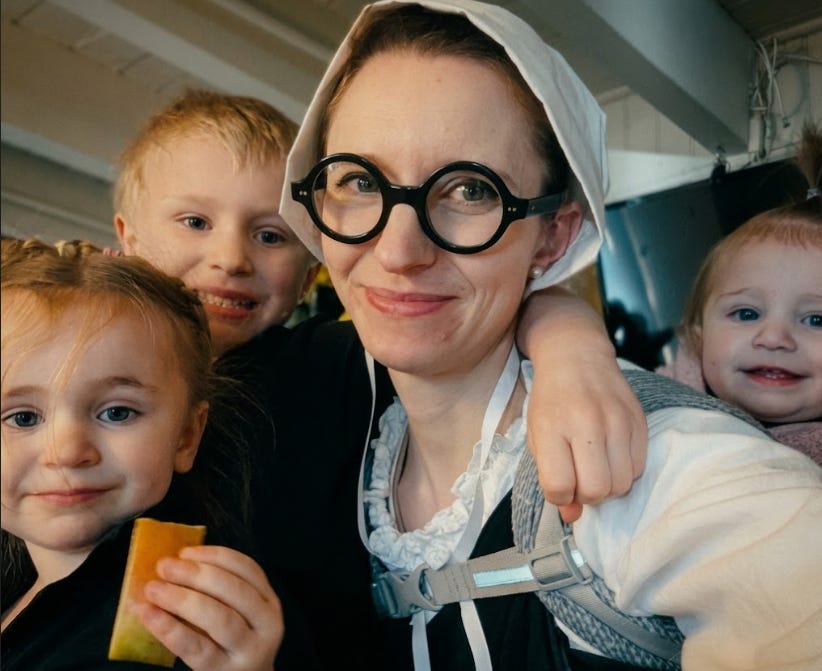
No, instead they used polygenic embryo screening —through companies like Heliospect Genomics and Genomic Prediction (now LifeView) - where each embryo was ranked and scored against the others based on projected traits, IQ, hair color, eye color, characteristics someone decided were worth selecting for.
Then they chose the one that scored highest and had it implanted. They have spoken about this openly. Proudly, even. Malcolm Collins has said on record that they will never choose a child “less privileged in IQ” than either of them, and that their goal is to have children in the "the top 0.1% of people.”
They have 34 frozen embryos ready to go children already named with plans to implant one every two or three years. Their goal is to have between seven and thirteen children total. They’re already at five.
They deny being "eugenicists" on a technicality: by their definition (per Malcolm), eugenics requires state coercion. That said, they're fine with the label "hipster eugenicists,” though.
Their argument boils down to, no, because we don’t work for the state we technically aren’t eugenicists. But it’s peculiar to say that given that Simone ran for political office in 2024.
Simone Collins ran as a Republican for Pennsylvania's 150th House district in 2024 and lost by 17.5% defeated by incumbent Democratic Rep. Joe Webster, a retired Air Force colonel, 21,915 votes to 15,263.
The argument that they’re just private citizens gets harder to make when one of them ran to become a state lawmaker, and they have many Silicon Valley friends intertwined in the webs of government.
Simone describes her look as “techno-puritan” — “chunky hipster glasses and a lot of modern equipment with a bonnet and linen clothing and weird puritan stuff.” But it is not just a fashion choice. It is also the name of a religion she and Malcolm invented, built around the idea that certain people are genetically superior and destined to lead. The Puritans believed God chose who was saved and who wasn’t. The Collinses believe science can now make that selection for you, before the child is even born.
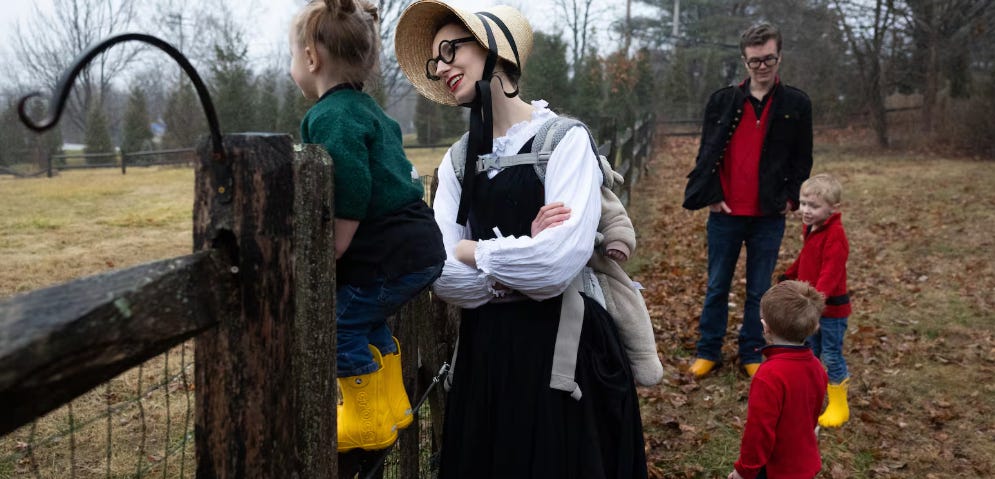
And they have built a network of people with the money to act on it.
Peter Thiel has put money into TMRW, a startup that automates egg freezing, and dropped $200 million into a fund pushing fertility services across Asia. One of his former fellows, Noor Siddiqui, went on to found Orchid, which screens embryos for over 1,200 conditions and ranks them by polygenic scores. Thiel Capital then led a $10 million round for Rhea, a Singapore-based company quietly buying up IVF clinics across Asia.
In America, embryonic gene editing is illegal — so Sam Altman's husband Oliver Mulherin and Coinbase CEO Brian Armstrong are funding a startup called Preventive to do it in the United Arab Emirates instead.
Reddit co-founder Alexis Ohanian's venture fund 776 is funding Nucleus Genomics. The startup has taken over NYC subway stations with ads urging commuters to have their "best baby” through polygenic screening.
The pro-natalist and the eugenic positions are very much aligned
— Kevin Dolan, NatalCon creator.
So, when you hear Dr. Oz and JD Vance tell America that they aren’t having enough babies, just know that this is less a family values movement and more an ideological project about who counts as the “right” kind of American.
If this kind of reporting matters to you, hit the Subscribe button.. this independent journalism only exists because readers like you make it possible.

Well as I've repeatedly said, no woman WANTS to mate with one of these freaks. In fact, there is a trend of not f*cking ANY of these guys, even for pleasure because God forbid the lady gets pregnant, she is TRULY f*cked because the Christian nationalists have abolished all doctors that can terminate their bastard pregnancies & are working to eliminate all contraception. It ain't worth it. So basically the guys like JD can go f*ck a couch 🛋!
Supporters of the view that the world is facing a serious overpopulation problem argue that rapid population growth places enormous pressure on housing, food supplies, fresh water, healthcare systems, infrastructure, and the natural environment. In many cities across the globe, rising populations are linked to overcrowded housing, worsening traffic congestion, strained public services, higher living costs, and increased competition for jobs and resources.
Critics of unchecked growth also point to deforestation, collapsing biodiversity, overfishing, pollution, and the expansion of industrial farming as signs that humanity is consuming resources faster than ecosystems can recover. Climate change concerns are often connected to this debate as well, since larger populations generally increase energy demand, waste production, and pressure on already fragile water and agricultural systems.
Others who lean strongly into overpopulation concerns argue that governments and corporations have avoided openly discussing the issue because it is politically sensitive, despite mounting evidence of environmental strain and resource scarcity in parts of the world.
They warn that if population growth continues without major advances in sustainability, cities could face worsening shortages of affordable housing, clean water, and reliable food production, while poorer regions may experience greater instability, migration pressures, and conflict over resources. Some researchers and policy advocates therefore support expanded access to education, healthcare, family planning, and economic development as humane ways to stabilise population growth while improving quality of life and reducing long-term environmental pressure.