

Why Your Vulnerability is the Only Thing That Will Save Us
The small but revolutionary things ordinary people can do to fix a fractured society.

Dearest Friend, welcome back. I know you are here for the journalism, and I promise you, that work continues. But this particular letter isn't about an investigation or a breaking story. Today, I'm putting the notepad down & speaking straight from the heart.
You're not hearing from the journalist right now — you're just hearing from the human behind Dissent in Bloom.
Today, in the middle of my unpaid lunch break, I read a piece about a local Children’s hospital where the nurses are just steps away from forming a union. This lit a fire in me.
As some of you know, I’m a nurse and I care a lot about fixing the deeply broken healthcare system. I spent my whole break reading up on labor history, dreaming about doing something similar one day. I was so ready to dive back in the second I got home.
On the drive home, I began to listen to music to amplify the mood. From Twisted Sisters, “We’re Not Going to Take It,” to Michael Jackson’s “They Don’t Really Care About Us.”
When my husband turned onto our street and the front steps of our house came into view, my mind was already racing through a mental checklist of everything I was going to research, all the people I was going to reach out to, and all of the plans I’d dreamed up on the ride home.
But as I made the climb up the stairs to my desk, the reality of the day slammed into me, and my inspiration evaporated as my body cruelly reminded me of its own limits. Before I even reached the top step, a sharp knot formed in my stomach and a heavy ache began to throb behind my eyes.
My mind was ready for a revolution. But I suddenly felt absolutely horrible; too horrible to even sit in my desk chair.
My life has been measured in the battles I’ve chosen to fight for those who couldn’t. It started small—protecting my classmates from bullies on the playground—and grew into marching in the streets and ultimately starting Dissent in Bloom.
Beneath the daily exhaustion and all the effort, there is one single truth that keeps me moving forward: I do this so that someone, somewhere, will have a better future. I know what it’s like to be the one to struggle, and I don’t want anyone else to ever go through that.
Radical empathy is often forged in the fires of personal struggle. The ones fighting the hardest to build a better world are usually the ones who know exactly how brutal it can be.
I talk about my health here. When you’re living inside it, it comes out. You can’t be pristine and perfect, but you can be human, and holding onto our humanity is the part that matters. The corporate polish, the ideologue voice, the smooth professional surface, all of it is bullshit in the end. People would be better off if they were themselves more often.
So I’ll be real about it. I’m managing several conditions at once, and I was born with most of them. There’s an autoimmune condition my doctors are still working to name. I have Ehlers-Danlos, so my joints bend in ways joints shouldn’t, and that means pain every single day. Spinal stenosis. Chronic migraines. Chronic hives. I’ve had over 12 surgeries. And I have a progressive genetic heart condition that killed my mom at 38 and has now found me.
I take between 10 and 16 medications a day. Injections every three months from two different doctors, plus one I do monthly. I still work full time. I am 29 years old.
I’m not on my deathbed, but the good days are getting rarer and the bad ones harder. I spend every one of them trying to leave this world better than I found it. If I do anything at all here, I want it to be that. Bad days mean a lot of hours flat on my back, and you do a lot of thinking there.
I’ve spent many hours laying in bed just pondering why some people grow up to become the Peter Thiel’s of the world, hoarding everything for themselves, building doomsday bunkers, and hurting people every step of the way.
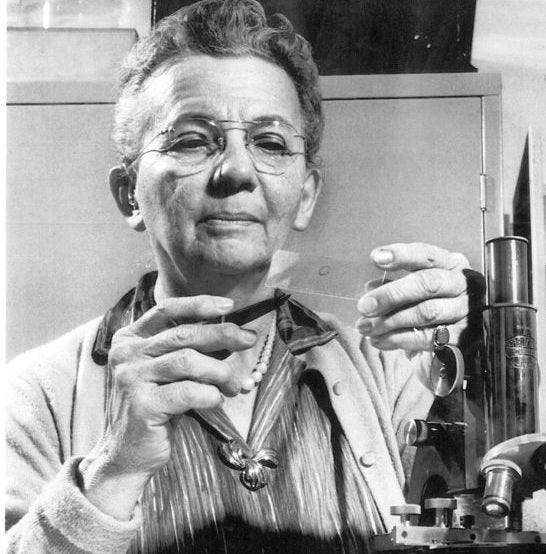
Others become the Florence B, Seibert’s, using their pain to heal people:
Florence B. Seibert contracted polio as a child, leaving her with a lifelong disability. Instead of letting that define her, she used her experience as fuel to ensure others wouldn’t have to suffer. She became a pioneering biochemist and revolutionized medicine. Before Florence, patients regularly contracted deadly bacterial infections from unsterilized IVs and injections. Because of her, we now have safe IV therapies, medications, and blood transfusions. She even invented the standard test for tuberculosis. Florence could have easily lost her life to disease; instead, she chose to save hundreds of millions of others from it.
I think it comes down to what kind of person we are when life drops a bomb on us. Y’know, they say that cockroaches can survive a nuclear blast. But who wants to just survive the blast if it means crawling around the rubble alone?
Thiel and men like him are a tale as old as time. There have always been people who look at human suffering and see an opening. Thiel looks at ICE and sees a growth market, even as dozens of people have died in ICE custody over the last two years alone.
That same idea, where a human body becomes a profit margin, created something school never taught me about.
In 1955, Jonas Salk’s polio vaccine was declared safe and effective.
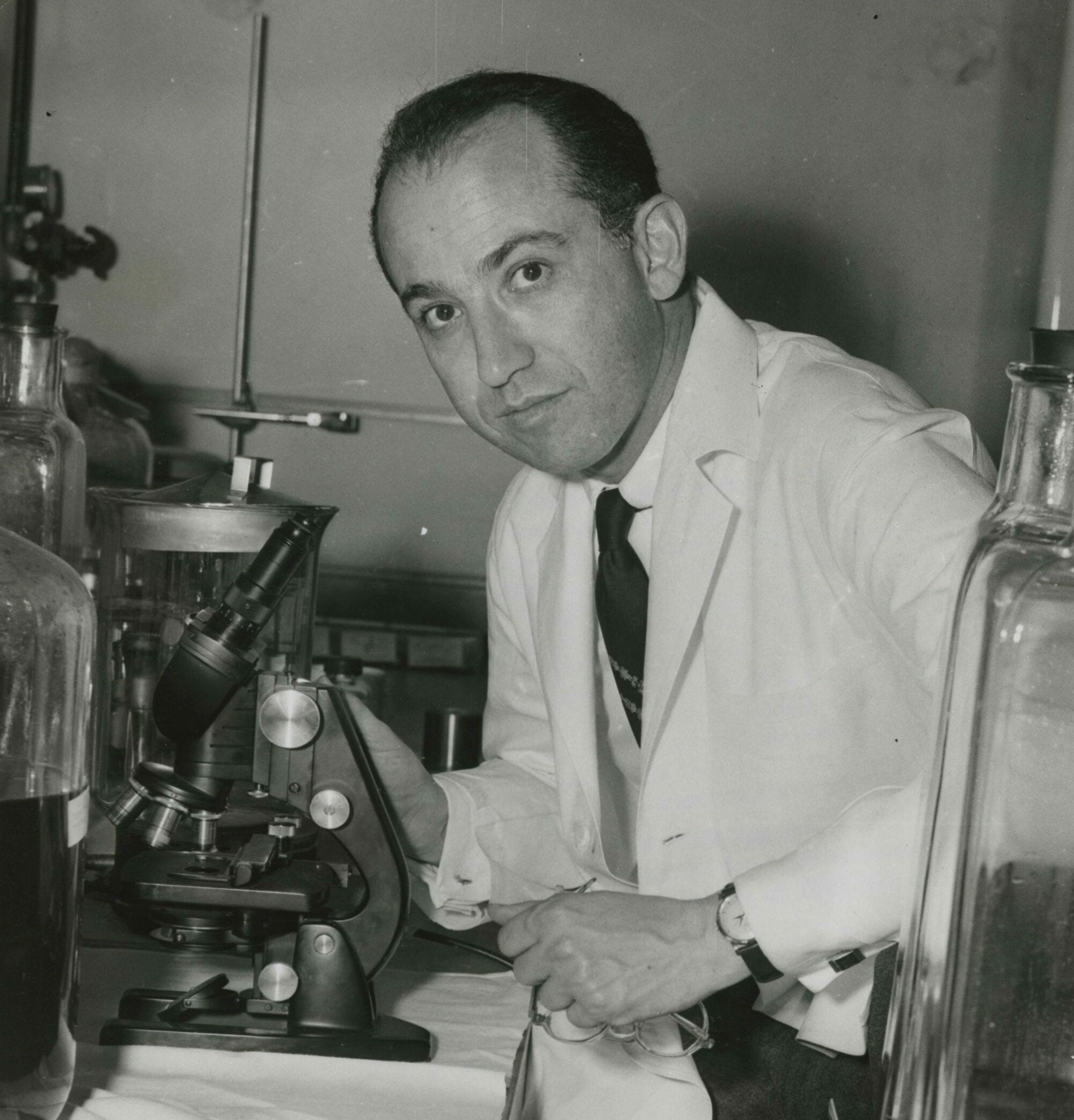
Demand was astronomical, and the government moved fast, contracting pharmaceutical companies to manufacture it. One of them was Cutter Laboratories. Salk’s design depended on a deactivated version of the virus, a killed thing the body could learn to fight. Cutter’s process failed and regulators looked the other way. Their vials went out carrying live, active polio.
Instead of preventing the disease, they injected the public with it. That failure caused 40,000 cases of polio, paralyzed 200 children, and killed 10. It stopped the vaccination campaign cold, shattered public trust, and forced the creation of the pharmaceutical regulatory system we rely on today.
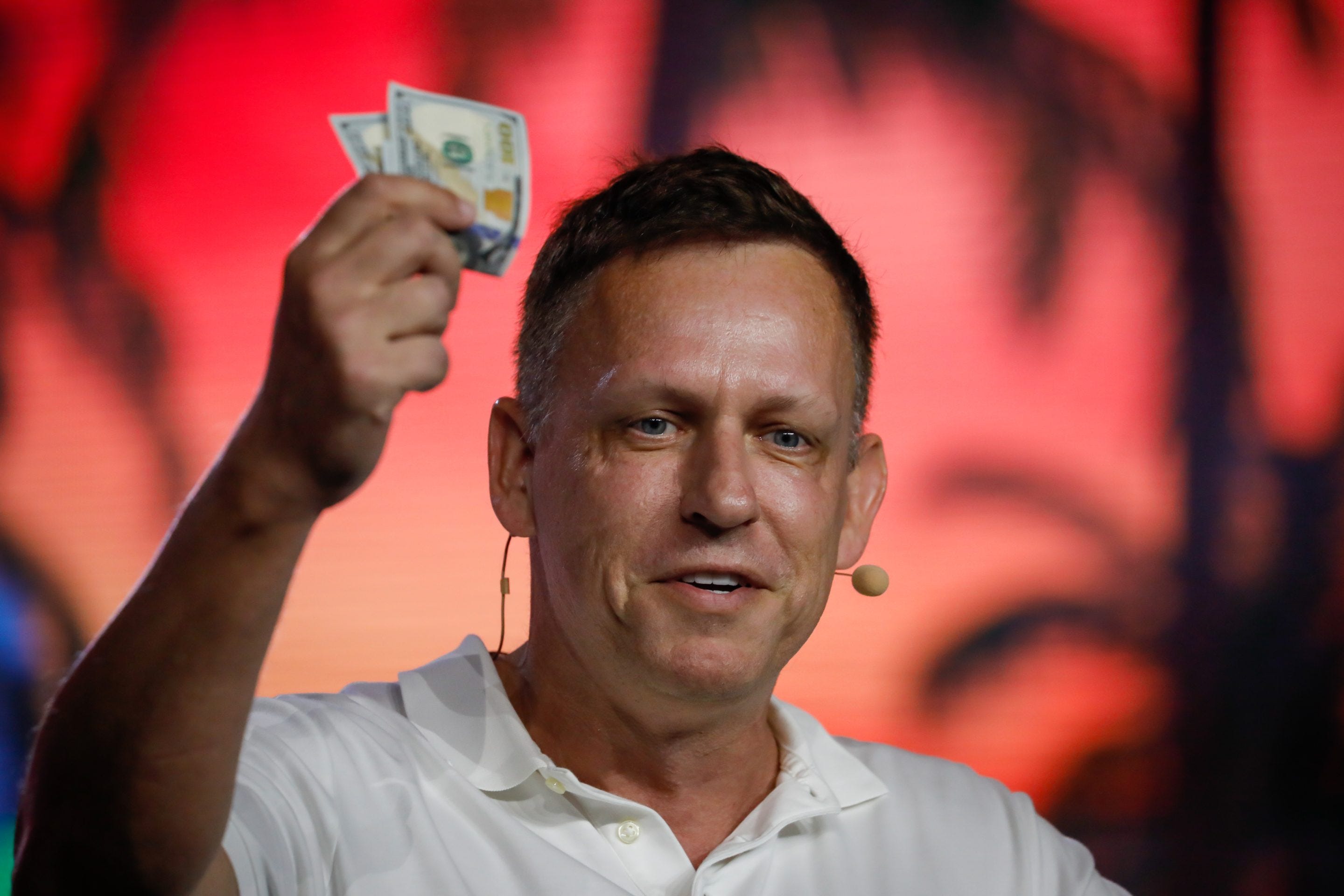
The Peter Thiel’s of the world — the ones who create companies that harm others for money — will always come and go. But it’s the Florence Siebert’s — and people like you, friend — who actually put in the work to leave the world a better place that matter.
You’re reading this because I wrote it down on a rough day, when my body betrayed me and I wanted to leave something behind anyway. Consider what you’ll do with yours.
As scary as everything is, all the headlines the people building doomsday bunkers have already lost because they look at others and see only threats. They have lost their humanity, and so they are afraid. I want a different legacy. I want to choose, repeatedly and unapologetically, that my suffering will be spent on others instead of building something hoarded. Money is fragile; your community is strength.
You can make this choice today. It does not require heroics, money, or being famous. It just requires doing small, tangible things for strangers.
Verify your voting status and sign up to work the polls. Support a neighborhood mutual aid fund. Sit through a boring local board meeting. Carry Narcan. Drive over to check on a struggling friend.
I want you to know that there is more good than bad in this world, and although the bad is often more visible, the good is still there. Our time is limited, and eventually, all of our bodies will eventually betray us. I am choosing to be a bridge instead of a bunker. Go do something small with that time this week.
I appreciate you taking the time to read this today. Knowing you are out there makes the hard days feel a little lighter. We are not just disconnected people surviving on our own. We are a collective force, and our strength comes from how we choose to show up for our neighbors. Thank you for being part of this community. Let us go out and prove we belong to each other.
This broke my heart in a good way. I was recently hospitalized for two weeks for a cardiac emergency. I am 77 and I have spent my life doing the work of organizing and speaking out for the downtrodden. My mother recently died at almost 98, and had heart issues that I never understood. My third son had a heart murmur and my second son had two consecutive heart attacks. Still, we have done good work and have a number of centenarians or near centenarians who did the good work… so my own cardiac issues were a surprise.
After I was sent home to continue aftercare treatment, I attended my first protest yesterday. I have suffered a number of fractures in recent times and avoided medication. My great-grandmother in Cuba who broke her hip at 96 continued to heal and lived to 106.
So hearing what you are going through was heartbreaking. I do believe in energy healing and teach and help with healing through Reiki. But obviously it didn’t initially help me.
I admire your commitment and courage. May you heal despite present challenges and medical predictions.
Thank you for sharing your personal trials and thoughts. That must be so difficult, but I'm sure it's true that what you've been through has given you superpowers when it comes to empathy.
Are you familiar with the Medical Medium books? He has an interesting take on auto-immune diseases, and many people say that a strict diet and some supplements helped them a lot. Please forgive me if this advice is unwelcome, but I want to offer the little I know of. I've had good luck with it.